The current investment ramp-up under the Special Fund for Infrastructure and Climate Neutrality (SVIK)
The German economy is back on track for growth and is proving more resilient than expected. The German government has raised the growth forecast in its autumn projection compared with its spring projection. It now expects GDP to grow by 1.3% in 2026, which is 0.8 percentage points more than previously projected. Growth rates of 1.1% and 0.6% are expected in 2027 and 2028 respectively.
This growth is mainly driven by strong exports and government investment in defence and infrastructure. In this context, the SVIK is playing a key role.
The significant ramping up of investments will make Germany more attractive as a business location. In addition to the direct fiscal effects on growth, improving the general economic conditions and the investment climate will also be decisive.
The figures below show the distribution of selected investment measures across different areas.
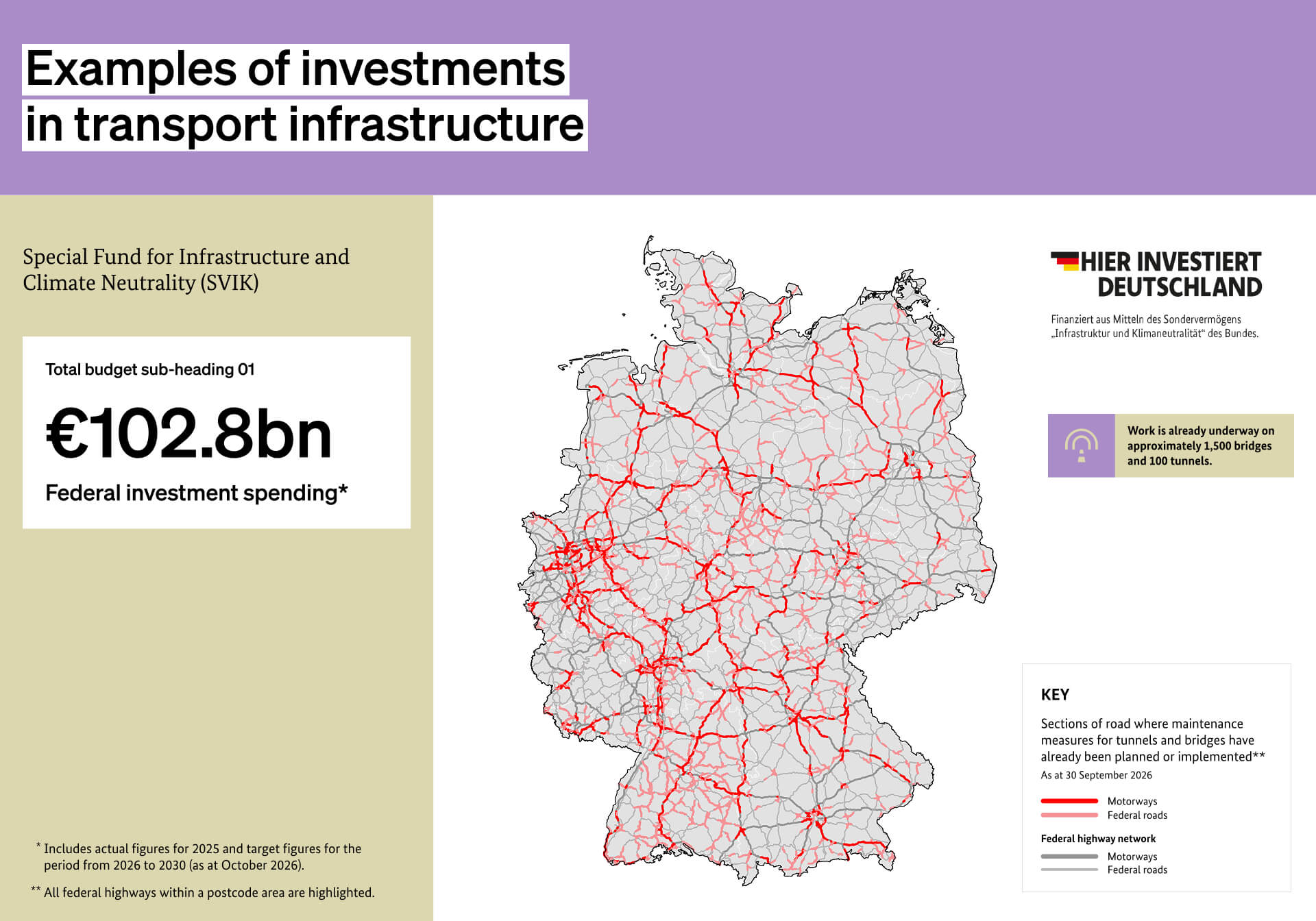
Transport infrastructure
Investment in transport infrastructure makes up the largest investment area of the SVIK (compared to the total volume). From 2027 onwards, funding will also be provided for federal waterways, in addition to federal highways and railways. An efficient and reliable transport infrastructure is key to the international competitiveness of an economy and can have a tangible positive impact on economic growth, for example by reducing disruptions and enhancing the efficiency of traffic flows.

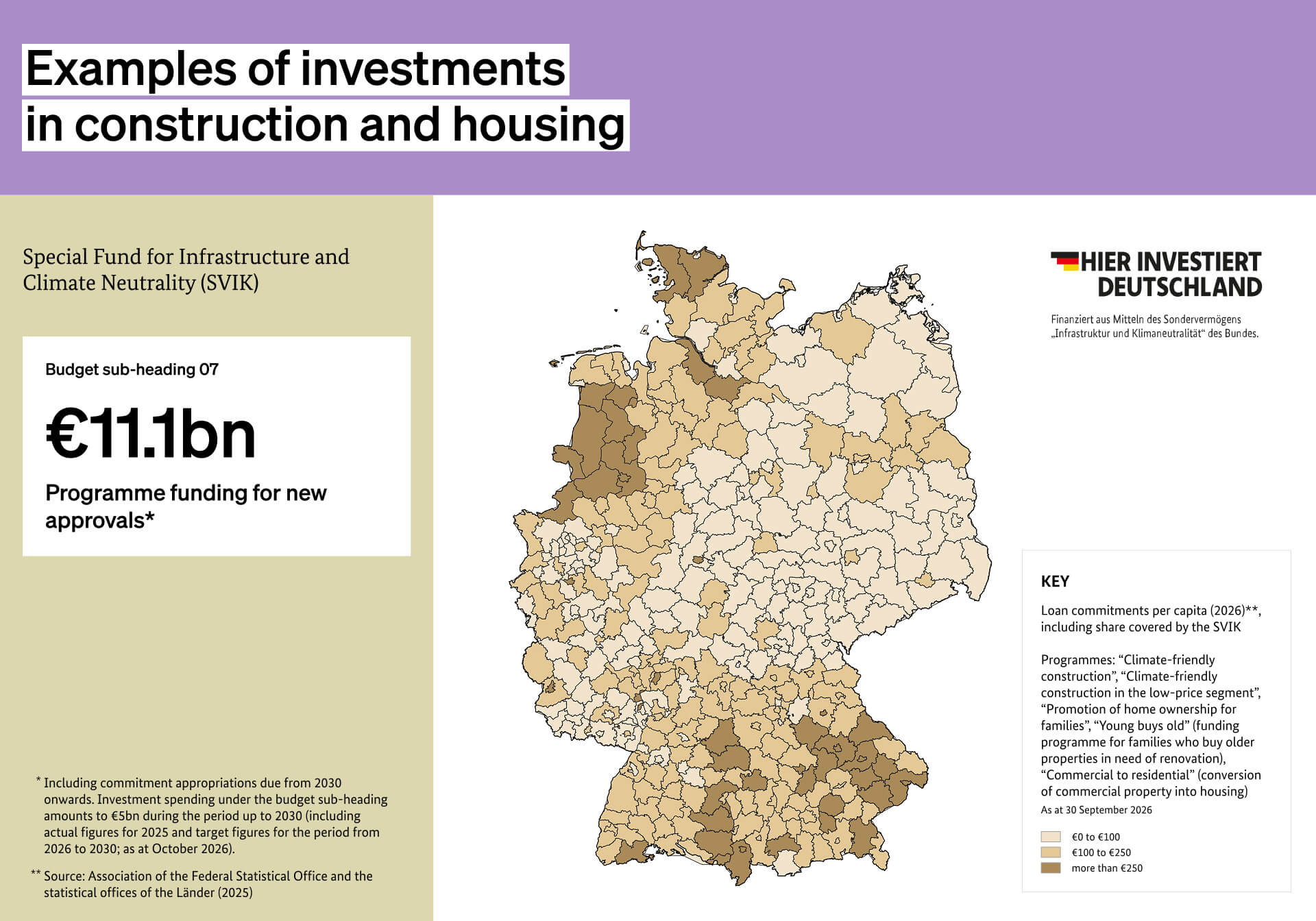
Housing construction
Investment in housing construction can help alleviate the persistent supply shortages prevalent in many housing markets across Germany. It can also help boost economic growth, as housing shortages in metropolitan areas act as a brake on growth. They make it more difficult for businesses to set up in an area, generate labour cost pressure and make the labour market less efficient in terms of geographical allocation. Investing in housing construction can also contribute significantly to reducing greenhouse gas emissions in the building sector.
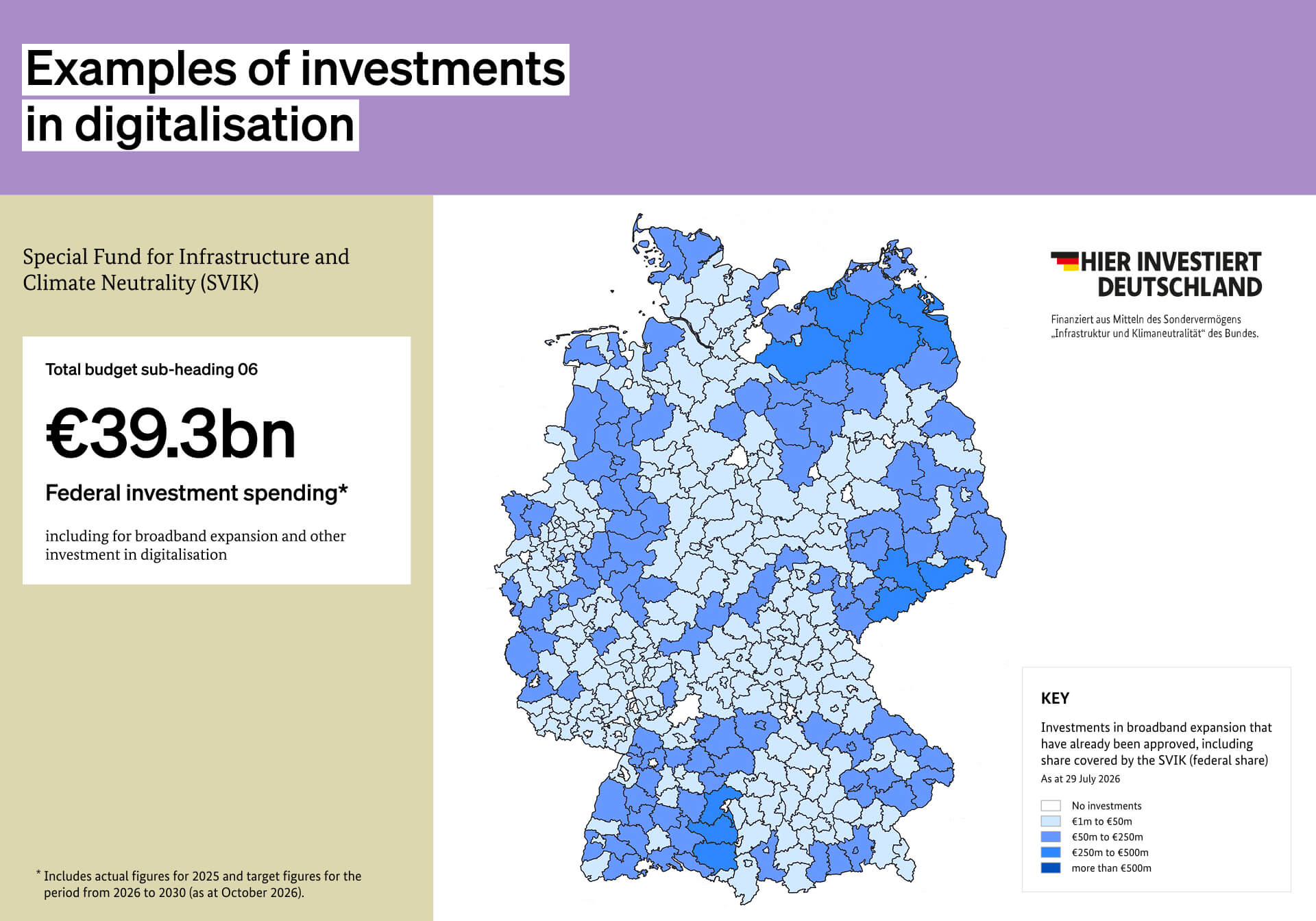
Digital infrastructure
Digital infrastructure investment financed from the SVIK will be increased significantly in 2027. An accessible, reliable and high-performance digital infrastructure has long been a key factor in ensuring competitiveness and sustainable value creation. Investing in high-quality, efficient digital infrastructure will also enhance Germany’s attractiveness as a place for private investment.
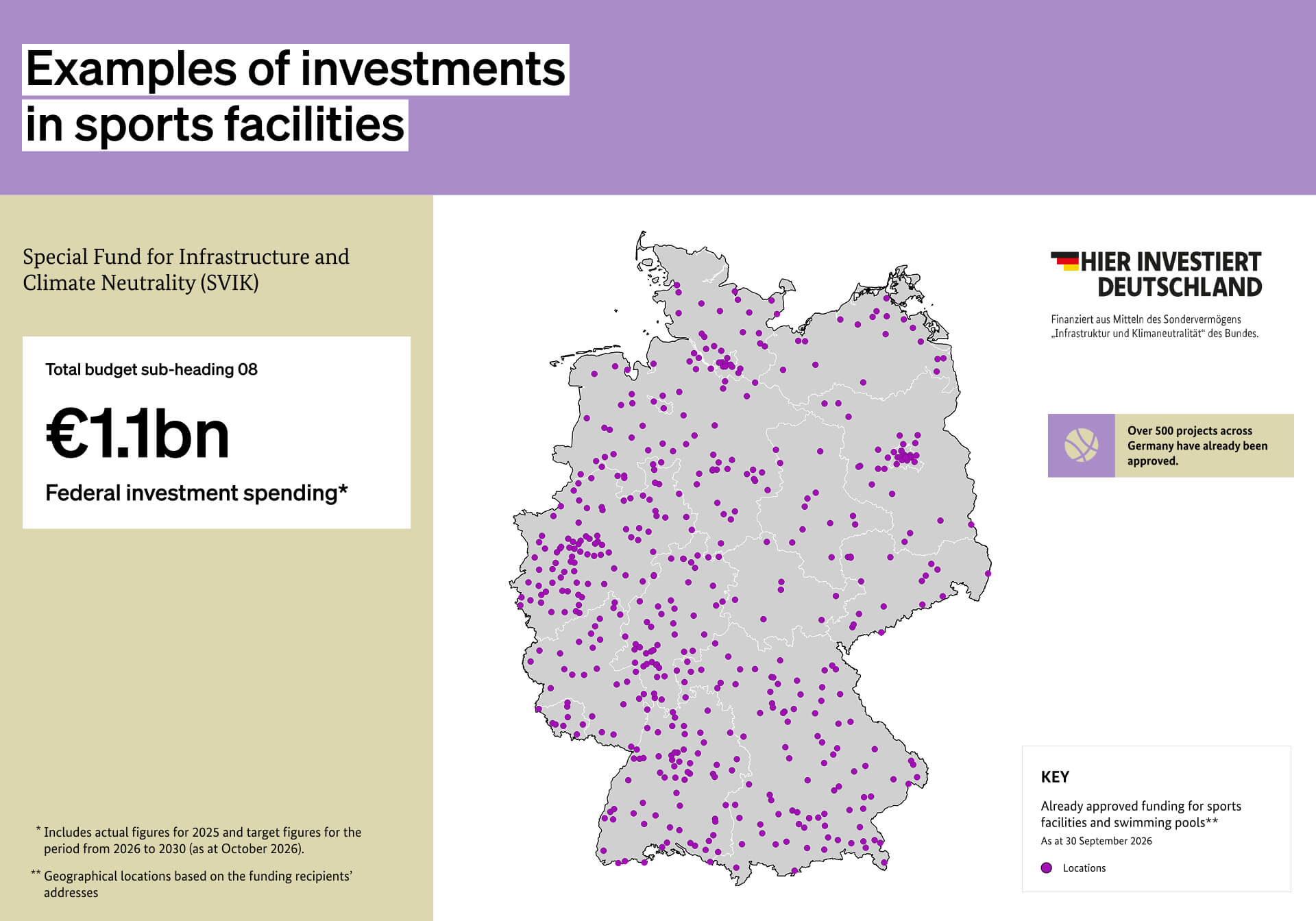
Sports infrastructure
Investment in sports infrastructure improves conditions for grassroots sport, school sport and elite sport alike. It supports sports clubs, which are an important pillar of social cohesion, and ensures that all segments of the population and all age groups have better access to opportunities for physical activity.